The answer in brief
Professional buyers increasingly use documentation and clear application support to evaluate supply partners. In practical terms, this topic is about the role of clear product information in modern B2B automotive-fluid evaluation. For automotive aftermarket distributors, service networks and EV-parts suppliers, the objective is not simply to collect product names; it is to identify the practical changes shaping EV-fluid demand.
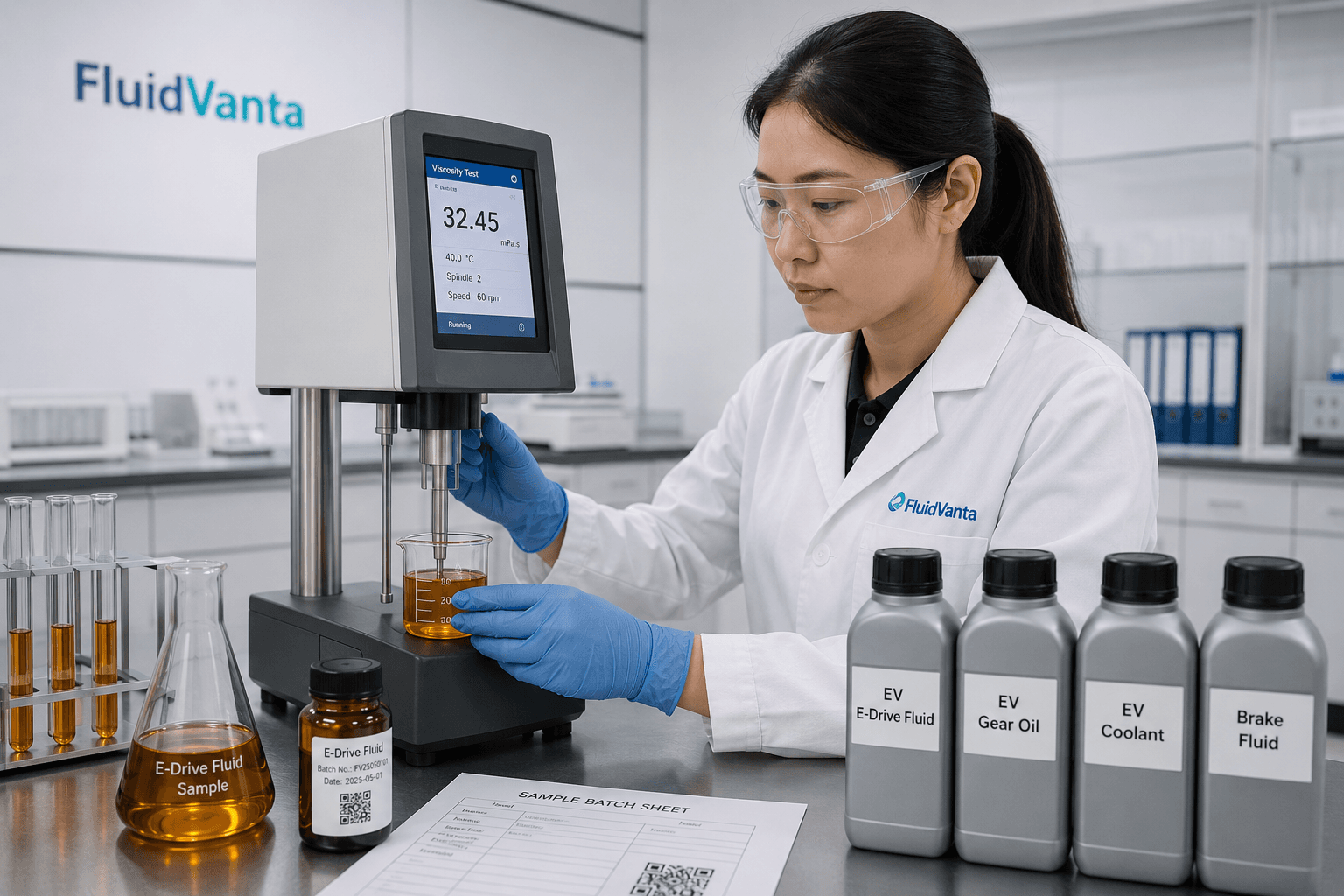
Product information can explain the intended role of EV E-Drive Fluid, EV Gear Oil, battery coolant, EV Brake Fluid, windshield washer fluid and EV A/C compressor oil before a buyer asks for samples or pricing.
Distributors and procurement teams use application data, safety information, packaging details and technical terminology to make internal approval and customer communication more consistent. This is where automotive fluid buying guide, EV fluid specification guide and technical documentation should be used as precise product and application terms—not as interchangeable labels.
What buyers should evaluate before making a decision
Documentation supports procurement review. This is the first filter for a practical EV-fluid, aftermarket or supply-chain conversation before a buyer compares packaging or price alone.
Application clarity supports downstream selling. It turns broad demand into a product brief that can be shared with engineering, procurement, sales and downstream distribution teams.
Technical content builds B2B confidence. Treat this as a repeatable approval process: confirm the point of use, collect the relevant product information and keep the market route visible from the beginning.
When technical content is unclear, buyers may compare only price or broad category names and lose the context needed for a defensible product decision. A useful working brief therefore identifies the system, the intended product category, the target customer, the necessary documentation and the next technical or commercial question.
How the topic changes by market and sales channel
This has growing importance in international programs where different teams may assess the same products across procurement, compliance, marketing and logistics functions.
For a distributor, the same topic may affect range planning and sales training. For a workshop network, it may affect application guidance and handling. For a private-label program, it may affect the label story, pack choice and the documentation that accompanies supplier approval.
This market context is important for answer-oriented search as well: an effective article should give a direct explanation, name the connected product categories and show the verification steps rather than making broad claims of universal suitability.
A practical next step for EV-fluid sourcing
Use answer-first product pages and document packs that state the application, product category, information status and next action in plain language.
Record the system coverage, product education, local market needs and supply planning in one working brief. This gives teams a clearer basis for supplier discussions, sample requests and internal approval while avoiding over-promising suitability before the necessary product information is reviewed.
For automotive aftermarket distributors, service networks and EV-parts suppliers, the most useful outcome is a clear, shareable decision trail: why this product group is being considered, which system it supports, what evidence is still needed and how the selected range will be presented in the target market.

