
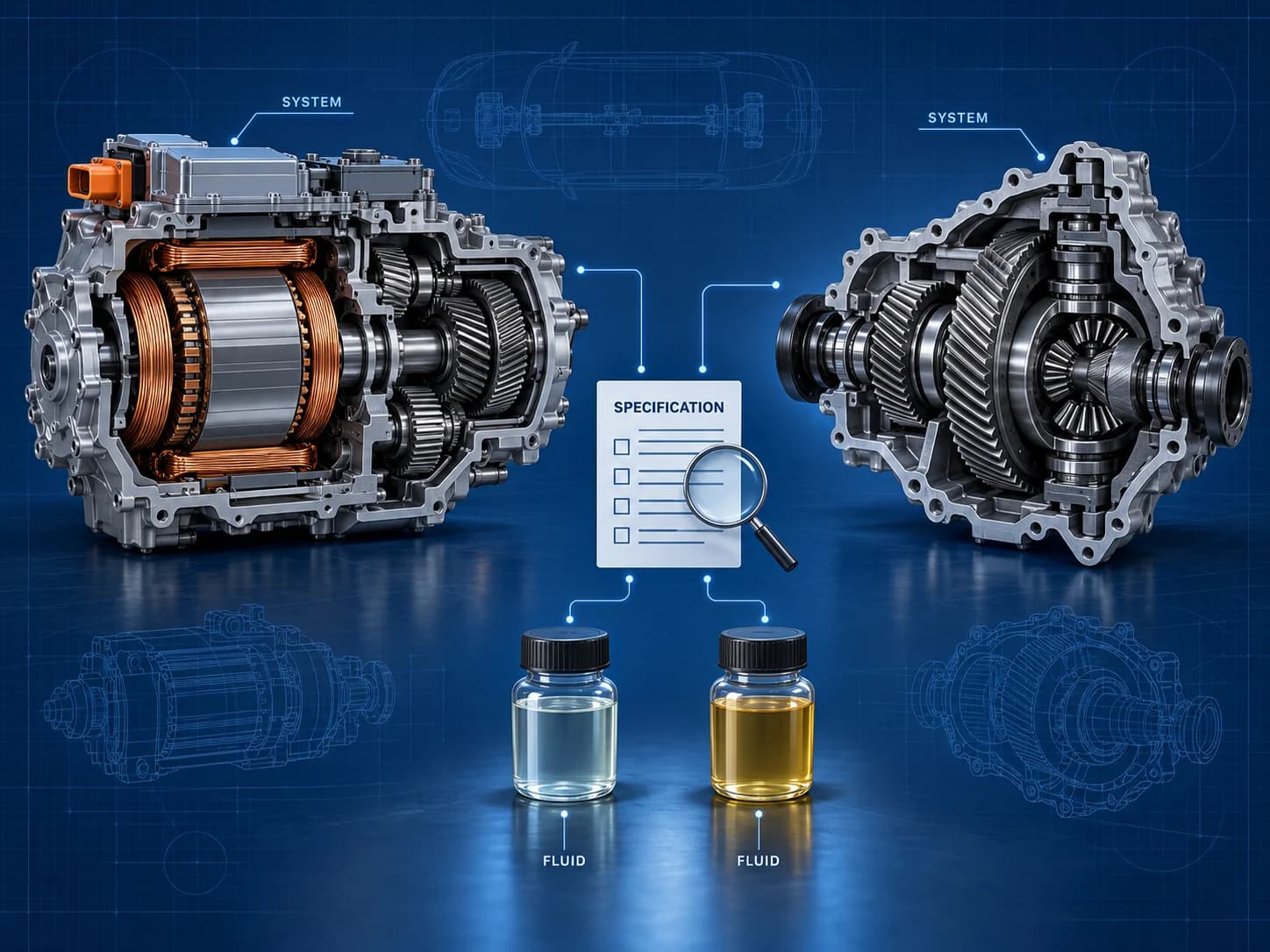
E-drive fluid and EV gear oil are not automatically interchangeable. The correct product depends on the drive-unit architecture, lubrication circuit, required viscosity, electrical environment, materials and equipment specification. A matching viscosity grade alone does not prove compatibility.
For distributors, importers, aftermarket wholesalers and fleet buyers, comparing e-drive fluid vs gear oil starts with identifying the assembly, not choosing a familiar bottle. Use this guide to prepare a technical inquiry and keep application approval separate from commercial ordering.
Quick Answer: Is E-Drive Fluid the Same as EV Gear Oil?
Some separate reduction gears or differentials may use an equipment-specified gear oil. Some integrated electric drive systems may require a dedicated e-drive fluid or a specified transmission fluid. Neither arrangement can be inferred from an EV badge or the product name.
Ask for the equipment requirement and compare the proposed product TDS against that requirement. A label saying “EV” or “75W-90” is a starting reference, not application approval. If the lubrication circuit is unclear, pause selection and request assembly information.
Buyer’s short answer: choose by the actual drive system and its specification. E-drive fluid and EV gear oil may serve different requirements; neither the category name nor a matching viscosity grade proves interchangeability.
What Is E-Drive Fluid?
An electric drive unit converts electrical energy into wheel-driving torque through a motor and associated transmission components. An e-axle brings electric propulsion and axle functions into an assembly; its layout may combine a motor, reduction gears and differential. An electrified transmission incorporates an electric machine into a transmission system.
Electric drive fluid describes a lubricant selected for the specified assembly and circuit. Depending on the design, fluid may encounter gears, bearings, copper, seals, polymers or electrical components. The name does not describe one universal formulation.
Evaluation may include lubrication, wear protection, foam control, low-temperature flow, thermal stability, copper protection and material compatibility. Do not assume every e-drive fluid has every property. Confirm actual performance through the product TDS and relevant test evidence, including the conditions under which testing was performed.
What Is EV Gear Oil?
EV gear oil is a product direction for specified reduction-gear, differential or related mechanical driveline applications. A reduction gearbox lowers motor speed and increases output torque; a differential permits driven wheels to rotate at different speeds. Either component may be separate or integrated within an electric axle.
75W-90 and 80W-90 are viscosity-grade references. SAE J306 classifies automotive driveline lubricants by rheological properties, not complete application performance. An API category, viscosity grade, equipment requirement and material environment therefore need separate review.
Conventional gear oil and e-drive fluid should not be described as invariably identical or entirely unrelated. An electric vehicle gear oil may have relevant material or electrical data, but only product-specific evidence establishes what has actually been evaluated. Ask an EV gear oil supplier to distinguish documented properties from untested assumptions.
E-Drive Fluid vs EV Gear Oil: Key Differences
Use this comparison as an inquiry framework, not a performance ranking. Product names do not define guaranteed properties; confirm each requirement against the equipment specification and the selected product’s TDS.
| Comparison item | E-Drive fluid | EV gear oil | What the buyer should confirm |
|---|---|---|---|
| Primary application | Specified electric drive assemblies. | Specified gears or differentials. | Exact component and application. |
| System architecture | May serve an integrated circuit. | May serve a separate mechanical circuit. | Shared or separate lubrication paths. |
| Viscosity requirement | Depends on the system specification. | May use a specified gear-oil grade. | Required grade and viscosity data. |
| Electrical environment | May require electrical-property evidence. | Electrical relevance depends on exposure. | Relevant tests, conditions and limits. |
| Copper compatibility | May encounter copper-containing parts. | Material exposure varies by assembly. | Copper-corrosion evidence and scope. |
| Seal and polymer compatibility | May encounter insulation and seals. | May encounter seals and polymers. | Exact materials and tested conditions. |
| Thermal and oxidation performance | May have combined thermal duties. | Requires application-specific thermal review. | Operating conditions and supporting data. |
| Gear and bearing protection | Must address specified mechanical duties. | Must address specified mechanical duties. | Load, speed and relevant protection tests. |
| Required technical documents | TDS, SDS and relevant test evidence. | TDS, SDS and relevant test evidence. | Product identity and document revision. |
| Interchangeability | Not established by the name. | Not established by viscosity alone. | Written suitability confirmation before ordering. |
Why Viscosity Grade Alone Is Not Enough
An inquiry for EV gear oil 75W-90 identifies a viscosity direction, not the complete equipment specification. An EV transmission fluid or e-axle fluid may face a different lubrication circuit, electrical environment or copper exposure. Matching one grade cannot resolve those differences.
When deciding how to choose fluid for an EV reduction gearbox, confirm the drive-unit architecture, operating-temperature requirements, gear and bearing loads, seal and polymer materials, product documentation and service instructions. These checks also apply when sourcing reduction gear oil for electric vehicles with a separate oil compartment. An electric axle lubricant inquiry needs the same hardware-specific discipline.
Do not infer drain intervals, service life or operating limits from viscosity measurements. Ask which evidence supports the intended use, and keep unresolved points visible in the approval record rather than filling gaps with assumptions.
1. First Inquiry: Vehicle, Assembly and Existing Fluid
Start with the vehicle model and year, assembly identifier if known, existing fluid information, destination country and quantity. A label photograph, assembly nameplate or maintenance record is useful when you do not have a full specification. You do not need to complete a technical questionnaire before making contact.
2. Product Review: Match the Requirement to the Evidence
After identifying the assembly, the responsible technical person should compare its service requirement with the exact product documents. The relevant tests depend on the drive-unit architecture; not every system exposes the fluid to the same materials or electrical components.
- Product name and model
- Intended drive-unit or gearbox application
- Required viscosity grade
- Relevant viscosity and temperature data, with test methods and conditions
- Copper-corrosion information
- Electrical-property information, if applicable
- Seal and material compatibility, if tested
- Applicable standards or specifications
- TDS and SDS
Typical values are not automatically guaranteed specification limits. A single-batch result should not automatically be presented as a long-term typical value. Use only identified, applicable evidence in the product review.
ASTM D445 addresses kinematic-viscosity measurement, while ASTM D130 evaluates corrosiveness to copper using a copper strip. A copper-strip result alone does not demonstrate compatibility with every winding, insulation or polymer. Ask for evidence relevant to the actual materials and application.
3. Order Confirmation: Samples, Packaging and Quantity
Keep technical product acceptance separate from bottle, label and carton approval. Agree the product reference, sample review, packaging, per-product quantity and delivery timing before the commercial order.
- Samples are charged. Sample fees can be credited toward a subsequent bulk order.
- Private-label orders start from 100 bottles per product, with quantities rounded up to full cartons. Different products cannot be combined to meet the per-product minimum.
- New formulations, special bottles and other custom requirements need a separate scope and MOQ review.
- Confirm the selected product’s pack and whole-carton quantity; agree lead time for that order.
FluidVanta Product References
These existing FluidVanta ranges are sourcing references, not substitution recommendations. Review the exact product and intended application before choosing a sample.
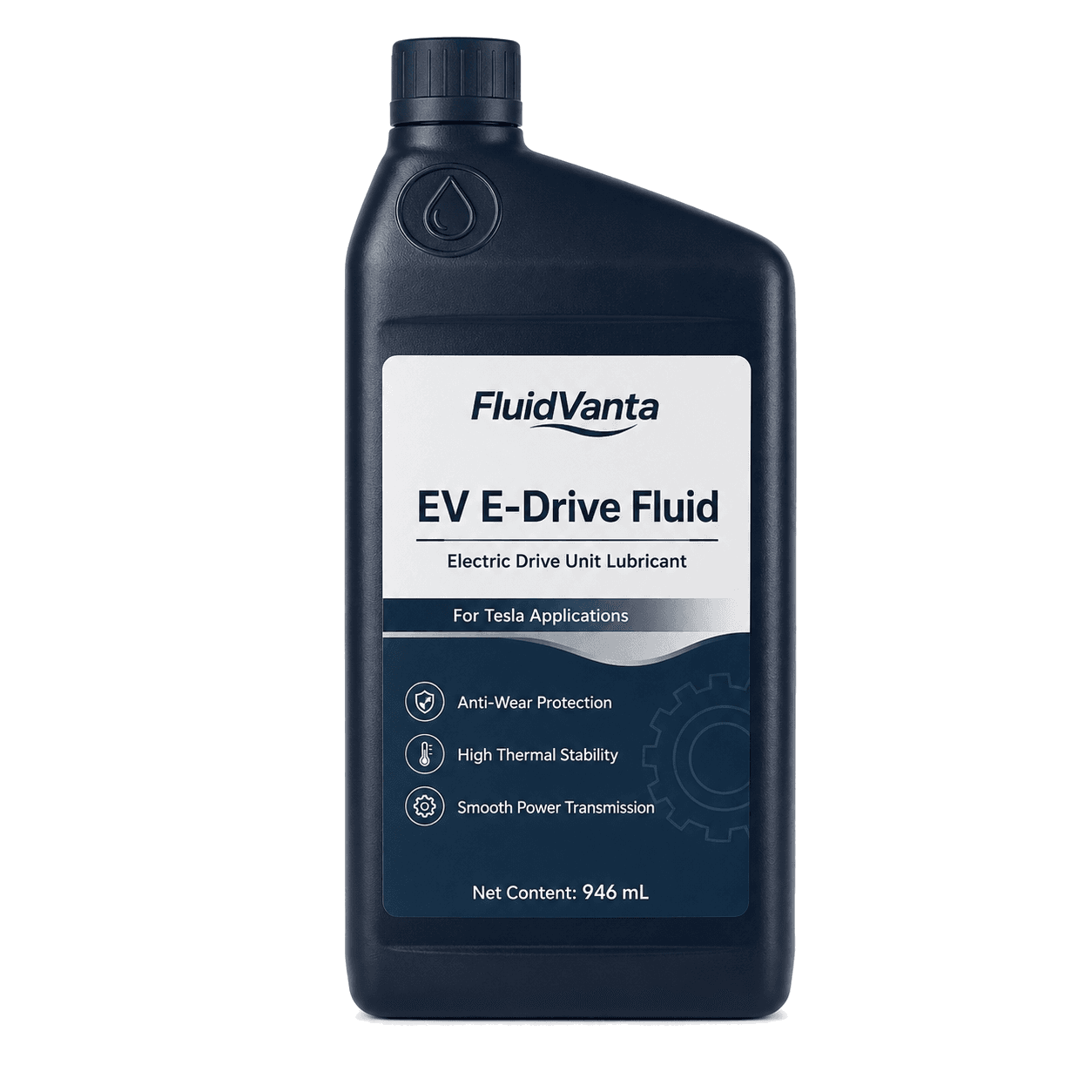
EV E-Drive Fluid
Explore electric drive-unit fluid references and identify the assembly and required specification for technical review. Final suitability must be verified before ordering.
View EV E-Drive Fluids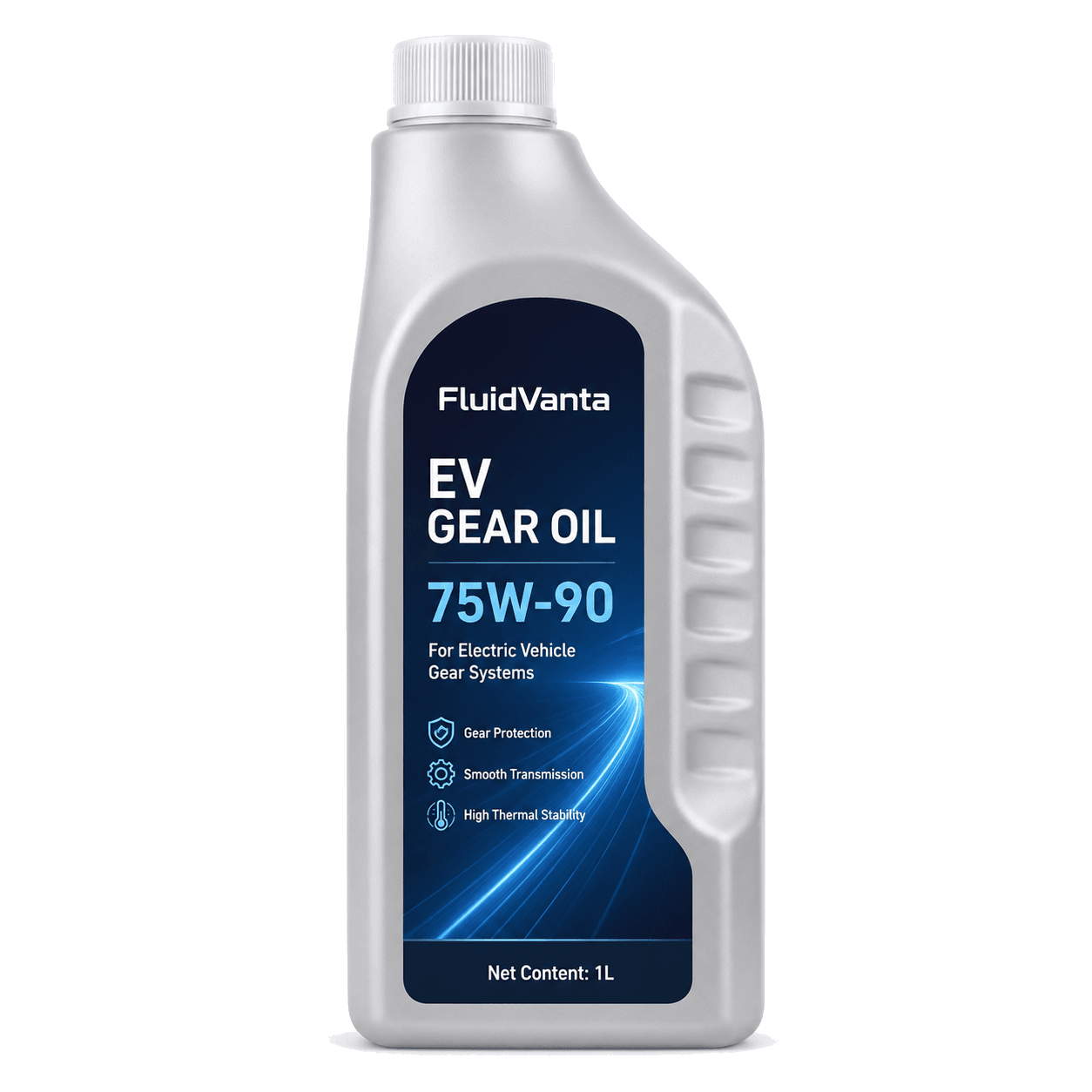
EV Gear Oil 75W-90
A gear-oil reference for reduction-gear and differential inquiries. Compare the gearbox requirement with the selected product TDS; the grade alone is not approval.
View EV Gear OilsKeep the Agreed Selection Record
Retain the assembly requirement, selected product reference, reviewed document revisions and agreed order details together. That record gives a repeat order a specific basis; an EV badge, brand name or viscosity grade alone does not.